This issue often comes up in renovation and maintenance projects. The client sees a discolored surface and wants it repainted, preferably as soon as possible. But paint does not remove growth, and a surface with mold must be cleaned before it is painted for the result to last.
What happens if you paint over mold?
The growth remains beneath the paint layer and can continue to grow. The discoloration often becomes visible after some time, and the paint adheres less well to a surface with growth, which can cause it to flake or peel. For the person performing the work, this poses a risk of having to redo the job and of receiving complaints. Furthermore, the damage often has time to worsen before it is discovered again.
Is mold-resistant paint enough?
Mold-resistant paint is designed to prevent new mold growth on a clean surface. It does not treat mold that is already present in or on the substrate. The paint can be a good final step after remediation, but it does not replace the remediation process itself.
Moisture is the root cause
Mold needs moisture to grow. If the source of moisture remains—such as a leak, condensation, or poor ventilation—the mold will return even after proper treatment. Therefore, the cause must be identified and addressed before remediation begins. Without taking this step, it is impossible to guarantee a lasting result.
Porous materials require more than just a surface treatment
On smooth, dense surfaces, mold growth is primarily confined to the surface. Wood, drywall, concrete, and other porous materials, on the other hand, have voids and channels where mold can grow deep into the material. A coat of paint simply seals the mold in place. On such surfaces, the treatment must be able to penetrate the material, and certain products are specifically designed for this purpose. Learn more about how mold remediation on porous materials affects the choice of method and treatment.
In what order are the preparatory steps carried out before painting?
- Identify the source of the moisture and make sure it is fixed.
- Treat the growth with a product that is appropriate for the surface and the extent of the damage.
- Treat any remaining discoloration. Alron Citrox is an acidic oxidizing agent with a cleaning effect that removes discoloration and is suitable for use in wet areas and on building facades.
- Make sure the surface is dry before you start painting.
- Paint with a color that matches the surface and the surroundings.
Products for mold removal before painting
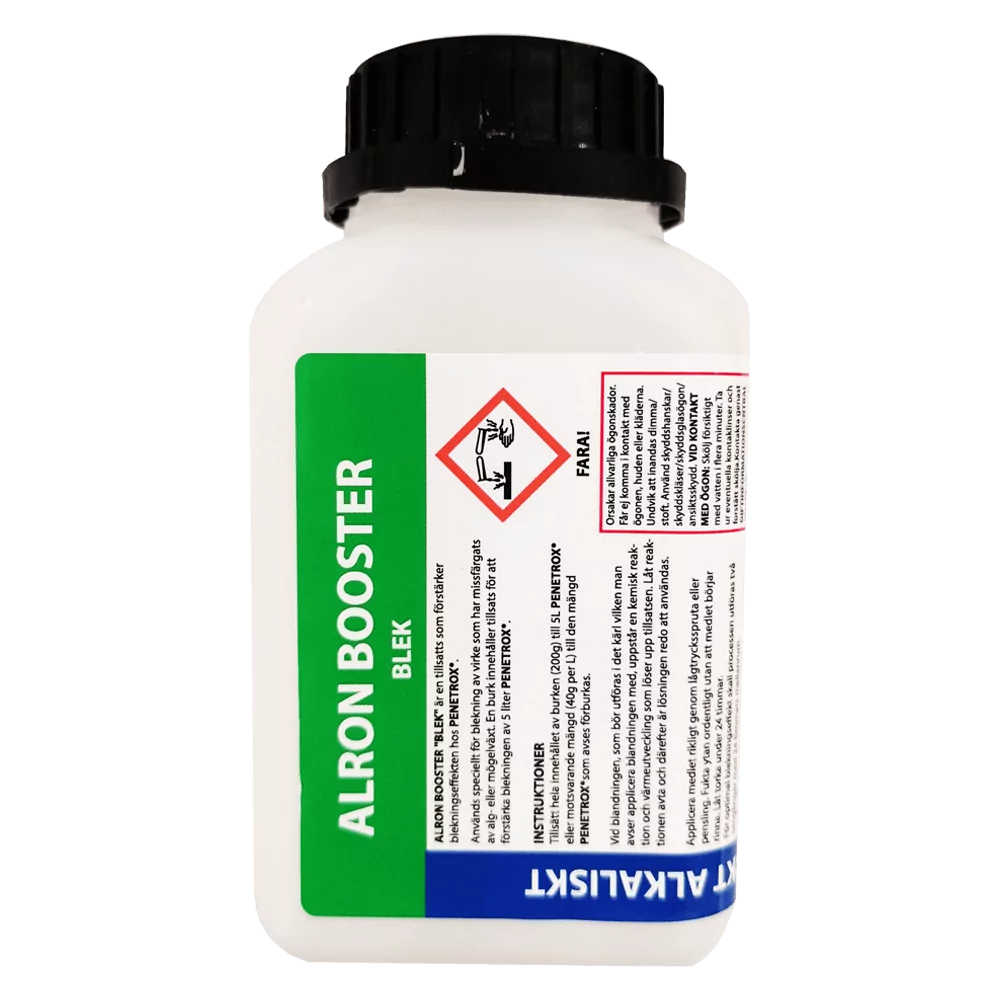
Alron’s mold removal products are designed for professional use and are primarily based on hydrogen peroxide. The products vary in concentration and formulation, and at higher concentrations, hydrogen peroxide also has a bleaching effect that can reduce discoloration on treated surfaces. Does your company need help choosing the right product for a specific surface or job? Contact us at Alron, and we’ll help you.